
Music
Music at Westbridge Academy
At Westbridge Academy, we believe in the transformative power of music. Our music program is designed to harness the cognitive and social-emotional benefits of music, nurturing students’ growth in both personal and academic realms. Through a comprehensive and immersive approach, students develop a deep appreciation for a wide range of musical styles while acquiring practical skills and theoretical knowledge.
The Cognitive and Social-Emotional Benefits of Music
Music education offers myriad cognitive benefits. Studies have shown that engaging with music enhances memory, attention, and problem-solving skills. At Westbridge Academy, we integrate these cognitive benefits into our curriculum, ensuring that students not only learn about music but also improve their overall academic performance.
Social-emotionally, music serves as a powerful tool for expression and connection. Through collaborative activities like ensemble performances and group improvisation, students learn to communicate effectively, empathize with others, and build strong, supportive relationships. These experiences foster a sense of belonging and self-confidence that extends beyond the music classroom.
A Comprehensive Music Curriculum
Singing
Singing forms the cornerstone of our music program. Starting with simple melodies and progressing to complex harmonies, students develop their vocal skills in a supportive environment. Our vocal training emphasizes proper technique, breath control, and pitch accuracy. Choirs and vocal ensembles provide opportunities for students to perform and showcase their talents.
Playing Instruments
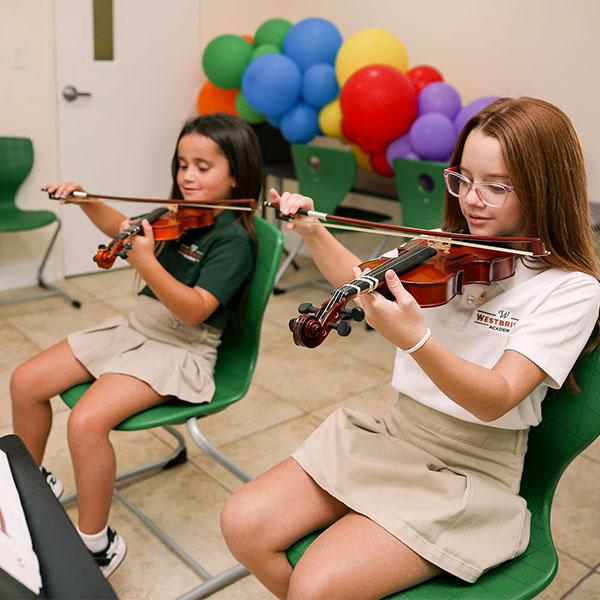
Instrumental instruction is a vital part of our curriculum. Students have the opportunity to learn a variety of instruments, including piano, violin, drums, and wind instruments. Our skilled instructors guide students through the fundamentals of playing, encouraging practice and discipline. Ensemble playing, such as bands and orchestras, allows students to experience the joy of making music together.
Reading and Writing Music
Music literacy is a key focus at Westbridge Academy. Students will learn to read and write musical notation, enabling them to understand and interpret music independently. This skill is foundational for further musical study and allows students to engage with a wide range of musical literature. Composition exercises encourage creativity and the application of theoretical concepts.
Improvisation
Improvisation is an essential aspect of musical education that fosters creativity and spontaneity. Through guided exercises and structured activities, students learn to create music in the moment. Improvisation helps students develop a deeper understanding of musical structure and enhances their ability to express themselves musically.
Creating Music
Our program emphasizes the importance of original composition and creativity. Students are encouraged to create their own music, exploring different genres and styles. This process involves critical thinking, problem-solving, and collaboration. By composing their own pieces, students gain a sense of accomplishment and a personal connection to their musical journey.
Exposure to Diverse Musical Styles
At Westbridge Academy, we expose students to a wide array of musical styles, from classical to contemporary, and from world music to jazz. This diversity enriches students’ understanding of music as a global phenomenon and broadens their cultural awareness. Our curriculum includes the study of significant composers, performers, and musical movements, providing a historical context for students’ learning.

Integrating Faith and Music
Our music program is rooted in a Christ-centered approach, reflecting the values and ethos of Westbridge Academy. We incorporate sacred music into our curriculum, exploring its historical significance and spiritual depth. Hymns, gospel music, and contemporary Christian music are integral to our repertoire. Through this integration, students learn to appreciate the role of music in worship and community.
Performance Opportunities
Performance is a vital component of our music program. Regular recitals, concerts, and showcases give students the chance to demonstrate their progress and share their talents with the community. These events are celebrated occasions that bring together students, parents, and faculty, reinforcing the supportive and collaborative spirit of Westbridge Academy.
Recitals and Concerts
Recitals and concerts provide platforms for individual and group performances. Students gain valuable experience in public performance, learning to manage stage presence and performance anxiety. These events highlight the achievements of our students and the effectiveness of our music education program.
Community Engagement
Our music program also emphasizes community engagement. Students participate in outreach performances at local churches, community centers, and events. These experiences help students develop a sense of service and connection to the wider community, using their musical talents to enrich the lives of others.
Music: Dynamic and Integral
The music program at Westbridge Academy is a dynamic and integral part of our educational approach. By offering a diverse and comprehensive curriculum, we ensure that students not only develop musical skills but also reap the cognitive and social-emotional benefits of music education. Our Christ-centered approach and emphasis on performance and community engagement further enrich students’ experiences, making music an essential part of life at Westbridge Academy. Through singing, playing instruments, reading and writing music, improvising, and creating, students embark on a fulfilling musical journey that nurtures their growth and enhances their education.